

Stand-up zipper pouches have become a common form of packaging, ranging from food and beverages to everyday consumer products. Their growing popularity has led many brands to believe that this type of pouch can replace almost all other forms of packaging. In reality, however, choosing the right stand-up zipper pouch is not only about shape or visual appeal; it must also take into account both the behavior of the product and the behavior of the end user.
The starting point for selecting a suitable stand-up zipper pouch is understanding how the product inside behaves during use. For example, dry goods or powders tend to remain relatively static; liquids are constantly in motion; and semi-liquids are often squeezed or pressed during use. These behaviors directly affect the pressure exerted on the pouch itself, the seals, and the zipper system. Choosing the wrong pouch can result in a poor consumer experience and long-term damage to brand perception.
The Core Considerations When Choosing Stand-Up Zipper Pouches for Proper Packaging and Use
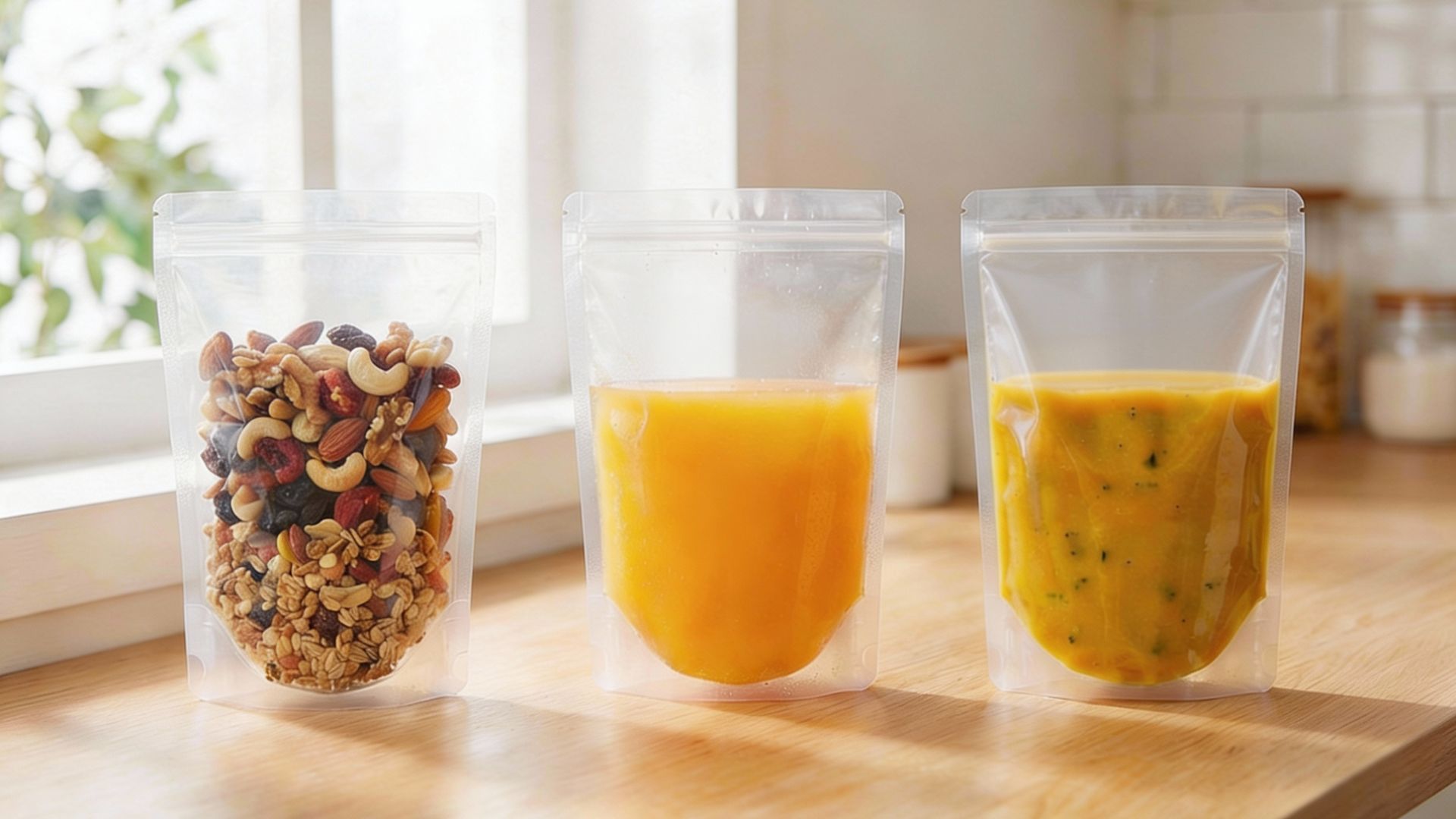
Weight and Volume Do Not Equal Suitability
Many pouch selections are based primarily on fill volume, such as 250 grams or 500 milliliters. What is often overlooked is the actual weight of the product once it is inside the pouch.
Heavier products, especially liquids continuously place tension on the pouch base and sealing areas. If the bottom gusset is not strong enough, the pouch may not stand properly, may tip over easily, or may lose its shape. This affects both shelf presentation and consumer confidence.
Opening and Closing Frequency Is a User Experience Issue
Stand-up zipper pouches are designed for repeated opening and closing, but zipper quality plays a major role in post-purchase experience. For products that are opened once a day or multiple times per day, the zipper must seal securely and consistently without loosening easily, particularly for semi-liquid or thick liquid products.
Product Lifespan Doesn’t End on the First Opening
Choosing the right stand-up zipper pouch requires looking beyond the retail shelf life and considering how long the product remains with the consumer after opening. Products that are used up quickly may not require extensive protective features. However, products that are used over weeks or months need pouches that help protect against air, moisture, or contamination in order to maintain quality as close as possible to the original condition.
Suitability for the Usage Context
While stand-up zipper pouches may appear to be versatile for all situations, the actual usage environment has a significant impact.
- Kitchen use requires stability and the ability to stand without tipping over easily.
- Bathroom use must withstand humidity and frequent squeezing.
- On-the-go or portable use requires confidence that the pouch will not leak or seep during transport.
Key Concepts to Consider Before Choosing Stand-Up Zipper Pouches
Before selecting a stand-up zipper pouch for any product, the most important factor is not following current packaging trends. Instead, brands should step back and thoroughly understand the relationship between the product, the user, and the pouch itself. A stand-up zipper pouch must do more than simply contain the product. It must support real-world usage throughout the entire product lifecycle.
1. The Type of Force the Product Exerts on the Pouch
Some products apply continuous pressure due to their weight or the movement of liquids. Other products create localized pressure from squeezing or pressing during use. If the pouch is not specifically designed to withstand these types of forces, problems may not be immediately visible on the retail shelf. These issues often become evident once consumers begin using the product.
2. The Duration the Consumer Will Use the Pouch with the Product
Products that are consumed or used up quickly may not require highly durable materials or advanced sealing properties. However, for products that are used continuously over a long period, the pouch becomes part of the storage process. If the zipper degrades, the material softens, or the seal fails to remain airtight, the quality of the product inside will be directly affected. This ultimately impacts consumer trust.
3. Where the Stand-Up Zipper Pouch Fits into the User’s Daily Life
Some products belong in the kitchen, others in the bathroom, and some are carried outside the home. These environments influence requirements such as stability, moisture resistance, leak prevention, and ease of handling. A pouch that appears ideal for retail display is not always suitable for the consumer’s actual usage environment.
Choosing Stand-Up Zipper Pouches Thoughtfully for Long-Term Product Quality with Hoei
Selecting a stand-up zipper pouch is a decision that directly affects product structure, user behavior, and long-term brand image. The right packaging makes products easier to use, helps maintain quality, and allows them to remain with consumers longer than expected.
Choosing suitable packaging should begin with a genuine understanding of the product itself. This includes its physical form, weight, usage frequency, and everyday usage context. Decisions should not be based solely on price, appearance, or market popularity.
Hoei places strong emphasis on stand-up pouch that align with real-world usage across different product types, including dry goods, liquids, and semi-liquids. By focusing on structure, materials, and the small details that influence long-term user experience, Hoei ensures that packaging does more than enclose a product. It becomes an integral component that enhances product value and credibility throughout every stage of use.
Making a careful and informed choice of stand-up zipper pouches from the outset not only helps prevent potential issues later on, but also establishes a strong foundation for sustainable product and brand growth over the long term.