

The EU’s PPWR (Packaging and Packaging Waste Regulation) began taking effect in 2025. By 2026, all packaging used for products sold within the European market must comply with new requirements.
For Thai SMEs that export or plan to export to the EU, this means that the food pouches currently being used may no longer meet the upcoming standards.
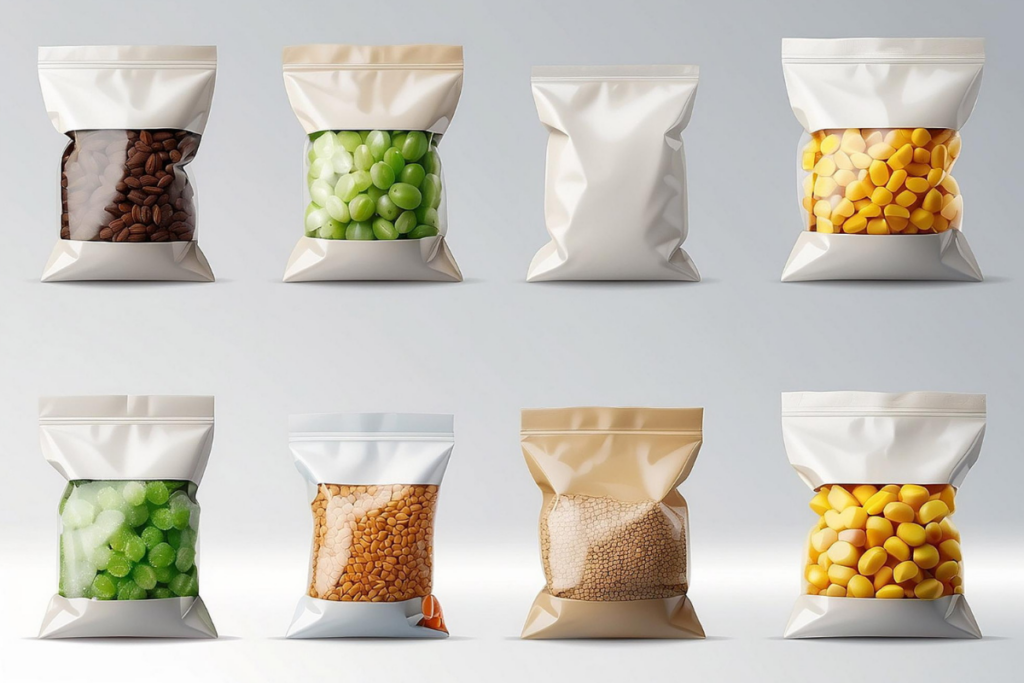
What is PPWR and Why Thai SMEs Need to Understand It Now
PPWR is a new EU regulation designed to reduce packaging waste and accelerate the transition toward a circular economy.
The regulation does not only evaluate the product itself. It also assesses:
- Packaging material structures
- Real recyclability within industrial recycling systems
- The total amount of packaging entering the market
A key principle behind PPWR is that packaging must be recyclable in real industrial systems, not only theoretically recyclable.
This places particular scrutiny on multi-layer packaging structures, which are widely used in the food industry but often difficult to recycle due to mixed materials.
For Thai SMEs, this is not a distant policy issue.
If products are sold in the EU market, their packaging must comply with the same requirements.
This means packaging is no longer just about cost efficiency or product protection.
It has become a condition for market access.
What Types of Food Pouches Will the EU Accept After 2026?
Most food pouches currently used in the market are made from multi-layer laminated films designed to provide strong barrier properties against oxygen, moisture, and light.
Common film structures include:
- PET/PE – A basic structure providing good strength and sealability
- PET/AL/PE – Includes an aluminum layer to enhance protection against light and oxygen
- NY/PE (Nylon/PE) – Improves resistance to tension and puncture
However, from the EU’s perspective, the main concern is no longer packaging performance.
Instead, the focus is on whether the packaging can be effectively recycled after use.
Multi-material laminated structures are difficult to separate during industrial recycling processes.
For this reason, many European brands are beginning to shift toward mono-material structures, such as:
- All-PE
- All-PP
These materials are easier to process within existing recycling systems.
For Thai SMEs, this means future packaging decisions must consider not only product protection but also the end-of-life pathway of the material.
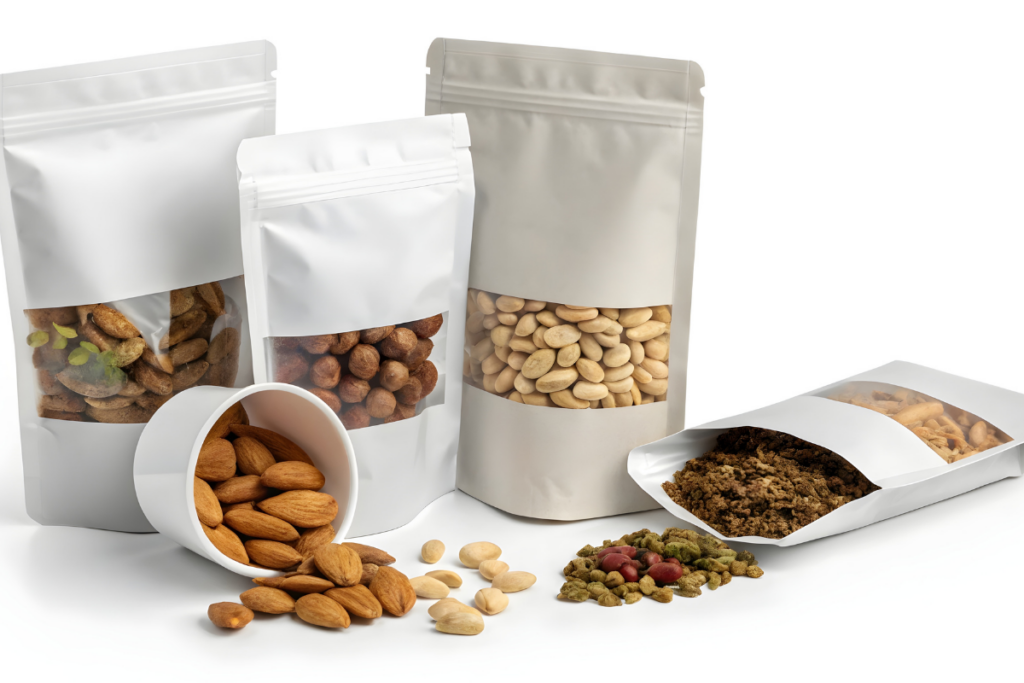
Can Multi-layer Films Still Meet the New Standards?
Multi-layer film structures such as PET/AL/PE or Nylon/PE have long been used because they provide excellent product protection.
They are especially common for products requiring high barrier performance, such as:
- Ready-to-eat foods
- Snacks
- Dry food products
The challenge is that these structures combine several materials to achieve performance features like strength, oxygen protection, and sealability.
But this complexity also makes recycling more difficult.
As a result, the EU is encouraging manufacturers to simplify packaging structures while still maintaining sufficient barrier performance.
For SMEs currently using multi-layer films, the issue is not that these structures are immediately “wrong”.
Rather, businesses should begin evaluating alternative solutions before regulations fully take effect.
Southeast Asia’s Climate & Why European Specifications May Not Be Enough
Packaging designed according to European standards is not always optimized for Southeast Asian conditions.
The region experiences consistently high temperatures and humidity, which can accelerate food degradation.
If packaging structures cannot sufficiently control oxygen and moisture transmission, product shelf life may be shortened.
Manufacturers therefore face a challenge:
balancing EU recyclability requirements with the need to protect products in tropical climates.
For SMEs exporting food from Southeast Asia, packaging structures cannot simply be copied from European specifications.
They must be designed to match both the target market and the real environmental conditions of production and distribution.
Climate Comparison EU vs Southeast Asia and Its Impact on Barrier Requirements
| Factor | Europe | Southeast Asia |
| Average Temperature | 15–20°C | 28–35°C |
| Relative Humidity | 40–60% RH | 70–90% RH |
| WHO Climatic Zone | Zone II | Zone IVb |
| Product Risk Level | Low – Moderate | High |
| Barrier Requirement | Standard | Higher than EU standard |
For SMEs exporting from Southeast Asia, film structures must therefore be designed for actual production and transportation environments, rather than simply adopting European specifications.
How SMEs Gain an Advantage by Preparing Early with HOEI
Regulatory changes often create pressure for businesses but they also create opportunities for companies that adapt early.
SMEs that begin evaluating packaging structures now will have time to:
- Test alternative materials
- Validate product shelf life
- Adjust manufacturing processes
before regulations are fully enforced.
Changing film structures is not something that can happen overnight.
It requires real testing for both shelf life stability and transportation performance.
The earlier companies start, the more time they have to make well-informed decisions.
Businesses that wait until regulations take effect may find they no longer have enough time to adapt.
With more than 30 years of experience in food pouch manufacturing, HOEI provides consultation on film structures designed to meet both EU regulatory requirements and Southeast Asian climate conditions.
FAQ
1. What is PPWR?
PPWR (Packaging and Packaging Waste Regulation) is a European Union regulation that sets new standards for packaging. It aims to reduce packaging waste, ensure real recyclability, and support the transition toward a circular economy.
2. When will PPWR affect exporters?
The regulation began taking effect in 2025, and several requirements will be fully enforced by 2026. Packaging used for products sold in the EU must comply with these standards before that time.
3. Can multi-layer food pouches still be exported to the EU?
Multi-layer packaging is not completely banned, but it is under increased scrutiny because recycling is more difficult compared to mono-material structures. Businesses should start evaluating alternative materials that meet recyclability requirements.
4. Why might European packaging standards not work well in Southeast Asia?
Southeast Asia has higher temperatures and humidity levels, which can accelerate food deterioration. Packaging used in this region must provide stronger control over oxygen and moisture transmission.
5. How should Thai SMEs prepare for PPWR?
Businesses should begin reviewing their current packaging structures, study EU recycling standards, and evaluate alternative materials or film structures to ensure their products remain eligible for export to the EU market.
References
- Department of Foreign Trade, Thailand.
Monitoring the Upgrade of EU Packaging Control Measures.
https://www.dft.go.th - National Metal and Materials Technology Center (MTEC).
PPWR: Regulation for Sustainable Packaging.
https://www.mtec.or.th/ppwr/ - Office of Agricultural Affairs, Royal Thai Embassy to the European Union.
Overview of Main EU Packaging Rules (PPWR) for Non-EU Agri-Food.
https://agrithai.be/regulation/