

In the modern ready-to-eat food landscape, consumers have become accustomed to foods that rely on freezers, refrigerated trucks, and temperature-controlled warehouses. This has given rise to a food supply structure that depends heavily on energy and complex management costs, far more than many people realize.
Foods that require preservation do not incur costs only at the production stage. They also involve expenses related to storage, transportation, and in-transit risk. If temperature control fails even briefly, an entire batch of food can immediately lose quality or become unsafe for consumption.
Packaging that allows food to be stored at ambient temperature therefore offers a structural advantage. It reduces complexity and risk across the ready-to-eat food supply chain, making food distribution far more flexible, especially in areas where electricity and infrastructure are unstable. This is precisely where ready-to-eat foods can break free from cold chain limitations in a meaningful way.
Retort Pouches and the Reduction of Risk Across Three Key Dimensions

A retort pouch is a flexible packaging format designed to withstand thermal sterilization under pressure. This process renders the food inside commercially sterile, allowing it to be stored at room temperature without relying on refrigeration systems.
The primary role of a retort pouch is not merely to contain food, but to partially replace the cold chain within the food supply system. When food no longer requires continuous temperature control, logistics change immediately across three main dimensions:
1. Reduced Risk from Failures in Power, Equipment, or Personnel
Food that can be stored at ambient temperature eliminates the risk associated with maintaining strict temperature control. Food safety is effectively “locked in” during the retort process, rather than being dependent on environmental conditions during transportation and storage. This results in fewer critical control points in logistics and makes risks easier to predict and manage.
2. Lower Energy Costs from Temperature-Controlled Storage and Transport
When refrigeration is no longer required, costs such as electricity for cold storage decrease significantly. This improves distribution efficiency, especially at large volumes or over long distances, where energy savings accumulate into substantial cost advantages for both manufacturers and distributors.
3. Greater Flexibility in Distribution Across Diverse Contexts
Ambient-stable foods can be distributed more easily to areas with incomplete infrastructure, such as remote regions, temporary distribution hubs, or emergency situations. Logistics systems are less constrained by physical limitations and can better accommodate uncertainty in electricity supply, specialized equipment, and skilled personnel.
What Types of Food Are Suitable for Retort Pouches to Reduce Cold Chain Limitations
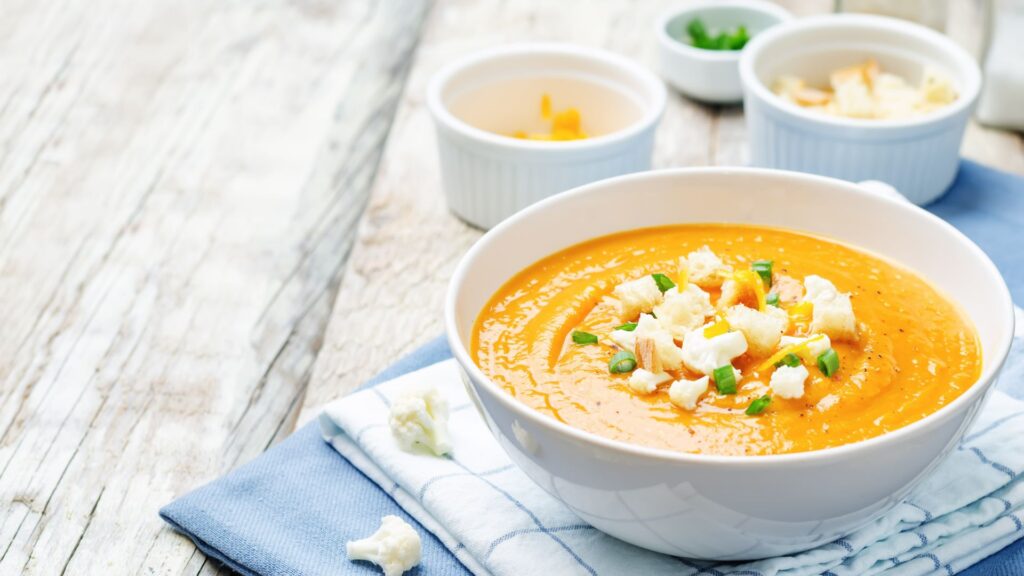
1. Foods Where Safety Is More Important Than Freshness
- Ready-made curries such as curry rice, green curry, and massaman curry
- Soups and stews such as vegetable soup, chicken soup, and beef stew
- Ready-to-eat meals for patients or the elderly
These foods tolerate heat well. Their structure is not damaged by the retort process, and consumers accept them in a reheated form rather than expecting freshly prepared texture and flavor.
2. Foods That Require Long-Distance Distribution or Have Limited Control at the Destination
- Ready-to-eat foods for export
- Emergency food and reserve food
- Foods for remote areas or regions with unstable electricity
- Foods distributed across multiple locations
In these scenarios, relying on the cold chain represents a risk rather than an advantage. Ambient temperature storage helps reduce uncertainty across the entire system.
3. Foods with High Cost of Failure
- Hospital food
- Food for aid and relief programs
- Large-scale catering systems
Retort pouches help lock in food safety at the source, preventing risk from being shifted to transportation or storage stages along the way.
Key Limitations to Consider When Choosing Retort Pouches
Although retort pouches can effectively reduce cold chain constraints, they are not a universal solution for every type of food. Important considerations include:
- Changes in flavor or texture caused by heat treatment
- Higher production costs and stricter quality control requirements
- Post-use packaging waste management concerns
Therefore, adoption should begin with food system design, not merely packaging selection.
Reducing Cold Chain Dependence Through Understanding, Not Simple Elimination with Hoei Retort Pouches
Retort pouches that allow food to be stored at ambient temperature are valuable not only because they extend shelf life, but because they prevent food safety from depending on conditions that are difficult to control during distribution, such as electricity supply, refrigeration equipment, or human error within logistics systems.
In traditional cold chain systems, food safety relies on continuous temperature control. Even a brief deviation can cause damage to an entire batch and make retrospective safety assessment difficult. In contrast, systems designed for ambient-stable food shift this risk back to the production stage, where standards can be defined, monitored, and consistently replicated with greater precision.
The ability of Hoei retort pouches to support stable and consistent sterilization processes enables manufacturers to design food systems that do not depend on cold chain availability throughout the entire journey.
Breaking free from cold chain limitations is therefore about redesigning the food system so that safety is no longer tied to uncertainty, made possible through the use of Hoei retort pouches.