

In today’s food industry, packaging pouches have become a critical mechanism for preserving and transferring food quality throughout the supply chain—from post-production handling and transportation to retail display and the moment consumers open the package. As a result, packaging directly affects cleanliness, safety, and taste by the time food reaches the buyer.
Conversely, when packaging quality is insufficient, food deterioration can accumulate unnoticed. This may include invisible contamination or gradual changes in flavor and quality, all of which undermine long-term consumer trust. For this reason, an effective food packaging manufacturer must rely on risk indicators linked to real storage and usage conditions, rather than depending solely on internal factory testing.
Given the growing complexity of modern food storage and distribution, Hoei’s food packaging factory has developed its pouch design approach to meet these expectations by applying both preventive (Prevention) and corrective (Correction) risk indicators in parallel. This allows packaging to better support food storage and transportation under real-world conditions.
Today, packaging quality can no longer be assessed solely through final inspections or general standards. Instead, it must be evaluated based on a manufacturer’s ability to identify and manage risk throughout the entire process—from design and production to storage and distribution scenarios that may change at any time. Risk indicators therefore serve as a critical decision-making tool, aligning factories and business operators toward the same objectives.
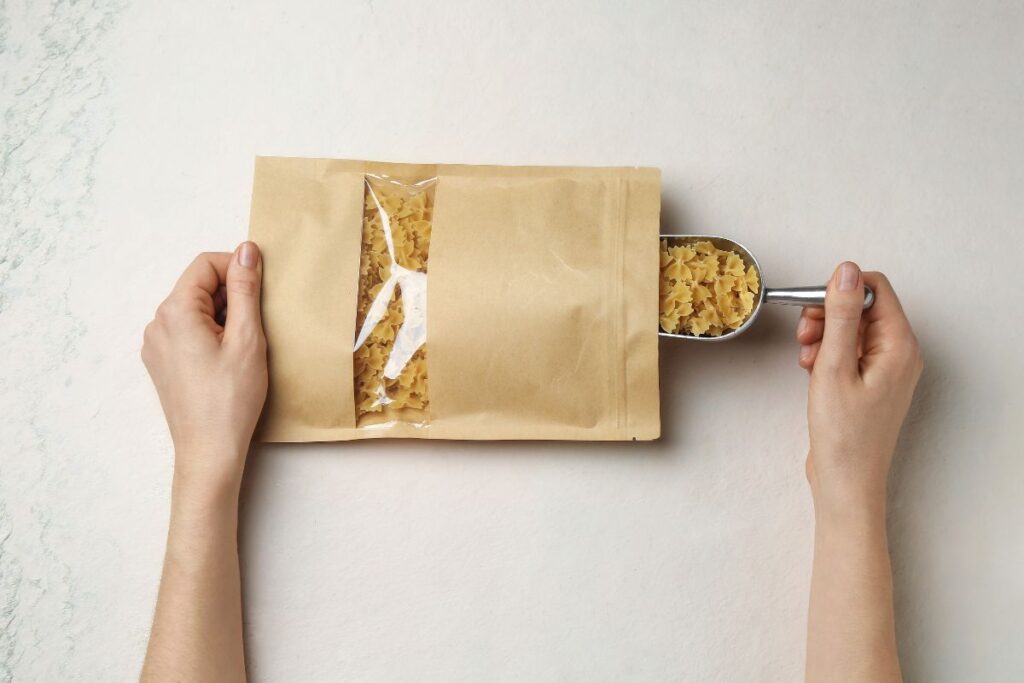
Hoei’s Preventive (Prevention) Principles in Food Packaging Manufacturing
Hoei’s preventive approach begins well before actual production starts. The factory does not view packaging specifications in isolation from the food product itself, but instead evaluates risk systematically—considering food characteristics, packaging environments, transportation conditions, and required shelf life.
Key preventive risk indicators emphasized by Hoei include:
- Assessing material structure suitability for each food type
- Defining safety margins before entering full-scale production
- Reviewing process-related risk points such as temperature, pressure, sealing performance, and quality consistency across batches
Operating at this level significantly reduces the likelihood of downstream issues and gives business operators confidence that packaging has been designed based on anticipated risks—not merely to pass minimum standards.
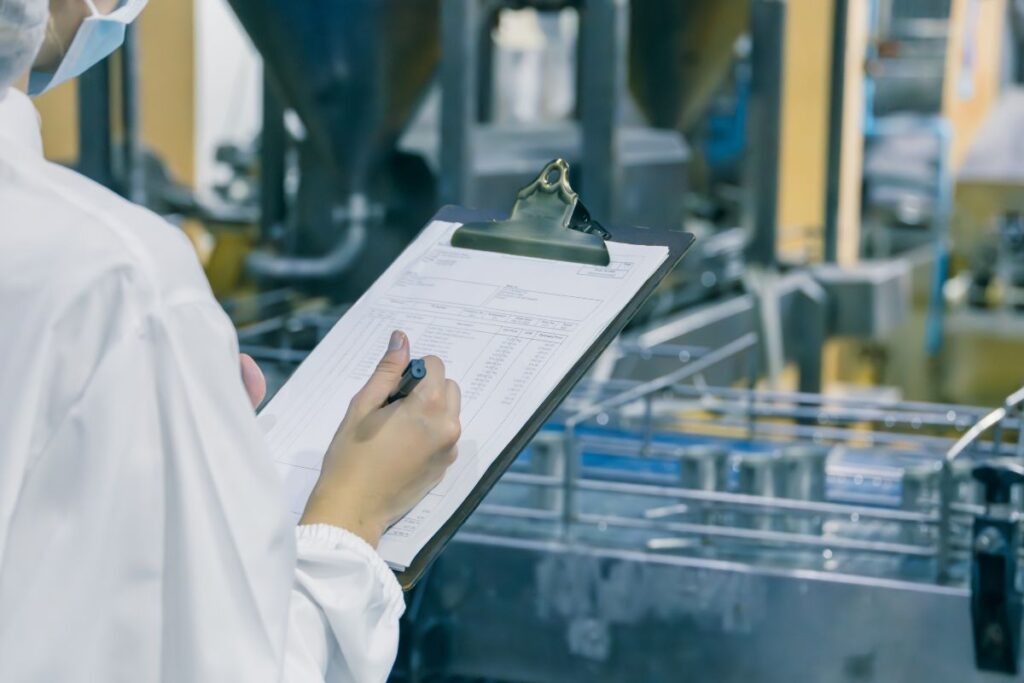
Proactive Correction in Hoei’s Food Packaging Manufacturing
Real-world production inevitably involves variability, including changes in raw materials, increased production speed, and constraints related to time and cost. Hoei therefore uses corrective risk indicators as a second core pillar, enabling adaptation without compromising fundamental food safety.
This includes:
- Evaluating the short- and long-term impact of specification adjustments on safety and quality
- Feeding insights gained from corrective actions back into future preventive systems
This approach ensures that operational constraints do not become weaknesses, but instead contribute to continuous system improvement.
Benefits for Business Operators When a Packaging Manufacturer Can Prevent and Manage Risk
Hoei’s distinction lies not in choosing between prevention or correction, but in integrating both approaches logically and systematically. This capability directly affects operator confidence in the following ways:
- Confidence that food safety is always the top priority
A factory with a clear risk assessment framework will not allow time pressures, cost constraints, or business demands to compromise hygiene and food safety standards.
- Flexibility in managing cost and time—without hidden risk
A data-driven correction system allows adjustments within defined boundaries. Business operators can make informed decisions based on impact awareness, rather than unknowingly degrading quality.
- A packaging partner that thinks beyond specification-based production
A risk-managed factory views packaging as part of food quality and consumer experience—not merely a component to be produced according to order.
Altogether, selecting a food packaging manufacturer is not simply about choosing a supplier, but about choosing a partner who shares responsibility for food quality all the way to the end consumer. A risk management approach that integrates both prevention and correction reflects not only internal manufacturing quality, but also the factory’s ability to operate on real data while understanding the business constraints faced by operators. This is what transforms packaging selection from outsourcing into true partnership.
Hoei: A Food Packaging Manufacturing Partner Helping Businesses Overcome Industry Risk
Hoei views risk not as something to avoid, but as something to be understood, prioritized, and managed collaboratively with business operators. In reality, food production and storage are always subject to limitations in time, cost, and changing environmental conditions.
Using both preventive and corrective risk indicators is therefore not just an internal quality control process—it is a working framework that allows operators to foresee the impact of each decision, clearly identifying which factors can be flexible and which should never be compromised.
This approach builds confidence not merely from meeting standards, but from knowing that packaging has been designed and managed with real business understanding—capable of supporting storage, distribution, and long-term growth without sacrificing cleanliness, safety, or food quality along the way.
For operators seeking a food packaging manufacturer that understands both risk and business constraints, Hoei stands ready as a packaging partner, designing pouches that confidently support product storage, distribution, and sustainable growth.